



Introduction
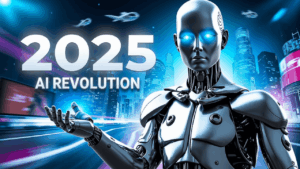
As we stair-step further into the mid-2020s, the world of artificial intelligence (AI) is no longer just futuristic hype — it’s central to how industries, societies and individuals are evolving. The year 2025 marks a turning point: the technologies are maturing, deployment is broadening, and the implications (both positive and negative) are coming into sharper focus. In this post, we’ll explore the innovations driving AI’s momentum, the challenges that are becoming unavoidable, and the opportunities that await those who navigate this space wisely.
1. Innovations: What’s New & What’s Coming
1.1 Agentic & Reasoning AI
One of the most important developments is the rise of so-called agentic AI or autonomous AI agents — systems that can not only answer questions but reason, plan and act with less human oversight. For example: bots that schedule, transact, coordinate between systems, or navigate hybrid human-machine workflows.
These systems shift the paradigm: not just “AI as tool” but “AI as collaborator”.
1.2 Generative & Multimodal Models
The growth of generative models (text, image, audio) and models that span modalities (e.g., image + text) continues to accelerate. With those, the frontier is less about whether AI can create, and more about how well and how safely. Innovations in reasoning, large-model architectures and custom hardware (silicon) are all part of this wave
1.3 Custom Silicon, Edge AI & Infrastructure
AI is no longer just in the cloud. Custom chips, edge-deployments, smarter sensors, and optimized hardware stacks are enabling AI in more places: phones, factories, vehicles, remote sites. According to the research: “AI reasoning and custom silicon fuel demand for chips
1.4 Industry-Specific Applications & Vertical Systems
Rather than generic AI for everything, we’re seeing more specialization: healthcare diagnostics, manufacturing optimization, legal-tech, agriculture, smart cities. The move is from proof-of-concept to embedded vertical solutions.
1.5 AI + Other Technologies (Quantum, IoT, Robotics)
AI is converging with other emerging tech: quantum computing promising to unlock new complexity, robotics/embodied AI acting in the physical world, Internet of Things feeding richer data, and so on.
Summary: The innovation wave is deepening — smarter, more autonomous, more ubiquitous, and more embedded in real life.
2. Challenges: The Roadblocks & Risks
2.1 Data, Bias & Quality
AI systems are only as good as their data and design. As one article states: “Using the current techniques, the performance gradually degrades … machine-generated data … produces less good stuff than human data.” Ensuring high-quality data, managing unstructured data (text, image, video) and eliminating bias remains a major hurdle.
2.2 Governance, Ethics & Regulation
With greater power comes greater responsibility. Issues of transparency, fairness, accountability, and privacy are no longer optional—they demand attention. Many organizations struggle to define who in the company “owns” AI, and how to govern it. Regulation is evolving but still catching up.
2.3 Technical Complexity & Deployment Gap
Moving from experimentation to production is hard. Many firms still struggle with infrastructure, integration, workforce skills and internal change. According to one paper: “who should run data and AI? Expect continued struggle.”
2.4 Cost, Compute & Energy Demands
As AI models grow in size and ambition, compute costs and energy footprints balloon. The demand for specialized hardware and data-centres increases, raising sustainability questions and financial burdens.
2.5 Societal Impact & Workforce Change
Automation, role-shifting and new kinds of AI-augmented work create disruption. The challenge is managing the transition—reskilling, adjusting to AI-augmented human roles, and avoiding large-scale displacement.
Summary: Innovation uncovers new risks and friction points. The better we anticipate and address them, the smoother the transition will be.
3. Opportunities: Where the Potential Lies
3.1 Productivity Gains & New Business Models
The upside is massive. For example, one report estimates the long-term AI opportunity in the workplace at US $4.4 trillion in productivity growth from corporate use-cases. Businesses that adopt intelligently stand to leap ahead. New models—AI-as-service, marketplace, embedded AI—are emerging.
3.2 Democratization & Wider Access
As tools become easier to use, more organisations (including startups, non-profits, governments) can access AI capabilities. This creates opportunity for innovation across geographies and sectors, not just big tech. Especially for regions and industries that adopt creatively.
3.3 Industry Transformation
From healthcare (personalised medicine), to agriculture (precision farming), to manufacturing (smart factories) — AI promises to re-architect entire sectors. For Indian readers, for instance, the chance to apply AI in local languages, local problems (agro-tech, microfinance, public service) is significant.
3.4 Competitive Advantage & Innovation Lead
For organisations that master the AI wave early, the barrier to entry becomes higher for others. The “first-mover + smart adoption” combo is powerful. As AI becomes strategic rather than tactical, it becomes a differentiator.
3.5 Societal Good & Global Challenges
AI offers tools to tackle big issues: climate change, healthcare access, education, resource optimisation. As one article says: “AI will help us find new ways to address some of the biggest challenges we face.” directed ethically, the upside isn’t just commercial but societal.
Summary: The opportunities are vast—but they require vision, strategy and responsibility to seize.
4. What This Means for India / Emerging Markets
While global trends apply, here are some special considerations for contexts like India and emerging markets:
-
Localisation & language: AI tools in Indian languages, oriented to local culture & problems, have unique value.
-
Leapfrogging: Emerging economies can skip legacy infrastructure hurdles and adopt newer AI-enabled models (fintech, agri-tech, health tech).
-
Workforce reskilling: With tech advancing fast, investments in human capability become critical—everywhere.
-
Regulation & data sovereignty: Local regulatory frameworks, data privacy laws, infrastructure constraints will shape speed & nature of adoption.
-
Responsible deployment: Ensuring AI benefits trickle down (not just to big firms), addressing digital divides, and avoiding systemic bias.
5. Actionable Recommendations
-
Define a clear AI Strategy: Understand how AI fits your mission, workflows and value-creation-model — don’t adopt AI just for novelty.
-
Start small, scale smart: Pilot with clear metrics, then scale what works — the biggest risk is over-ambitious rollout without groundwork.
-
Invest in data: Quality, governance, unstructured data management are foundational. Without this, even the best model will struggle.
-
Govern for trust: Embed ethical review, bias mitigation, transparency, human-in-loop where needed.
-
Build infrastructure mindfully: Consider compute, energy costs, edge vs cloud trade-offs, regional constraints.
-
Upskill your people: Equip teams with AI-adjacent skills — data literacy, human-AI workflows, change management.
-
Watch regulation & ecosystem: Be aware of evolving laws, open source models, competitor moves, domain-specific risks.
-
Focus on use-cases that matter: Especially those with operational efficiency, new revenue potential, societal benefit — these will deliver the most value.
6. Looking Ahead: What to Watch in 2026-2027
-
Will agentic AI move from internal tasks to customer-facing roles widely? Currently many firms believe it’s emerging.
-
How will quantum computing + AI deploy in practice? The promise is big, but real-world applications are still nascent.
-
How will energy and sustainability challenges evolve as AI compute demands grow?
-
Will new regulation (data sovereignty, AI safety, model auditing) accelerate and form global standards?
-
How will societal attitudes evolve? As AI becomes more embedded, trust, transparency and human-machine collaboration become crucial.
Conclusion
By 2025, AI is not just “coming soon” — it’s here, and the question now is how we use it well. The innovations are astonishing, the opportunities immense, but the challenges real and urgent. For businesses, governments, technologists and citizens alike, the imperative is to engage thoughtfully: harness the power of AI, while respecting the responsibilities that come with it.
The future will belong to those who balance innovation, impact and integrity — thriving not just in what AI can do, but in what it should do.
