


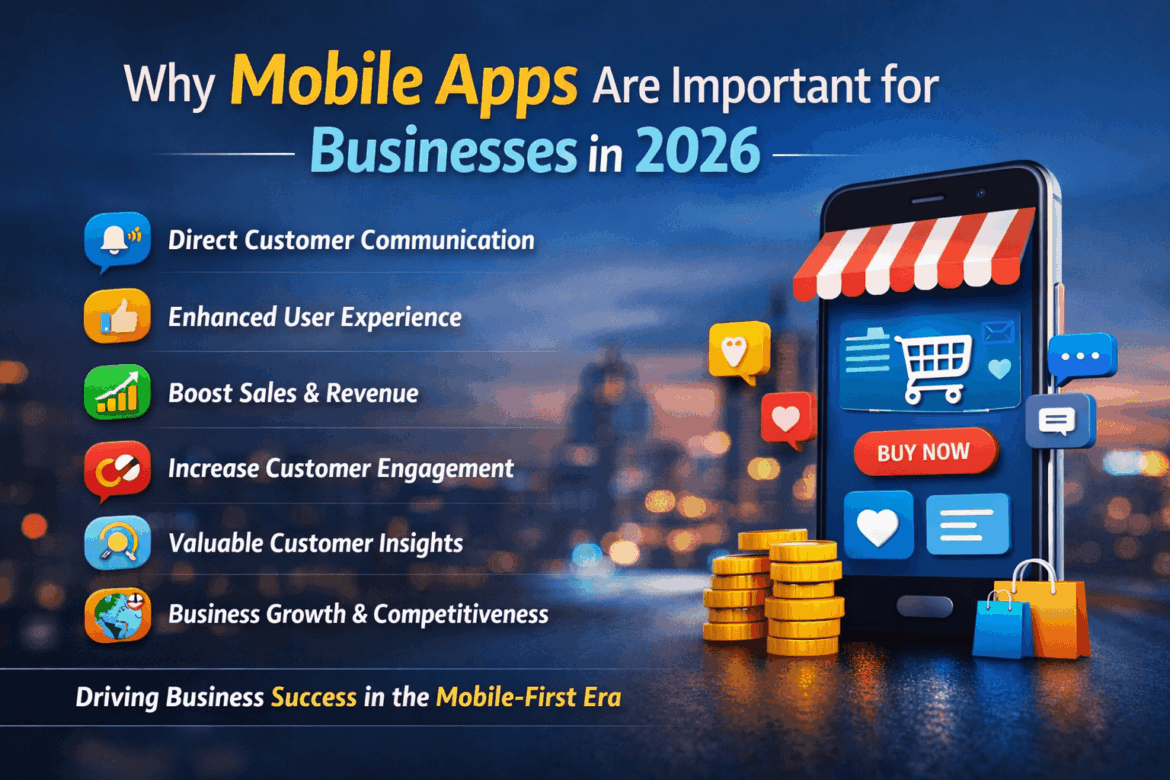
In today’s digital-first world, mobile apps have become one of the most powerful tools for businesses to connect with customers, improve operations, and increase revenue. With billions of smartphone users worldwide and growing dependence on mobile technology, businesses can no longer rely only on websites or physical stores. Mobile apps offer a direct, personalized, and convenient way to engage customers anytime and anywhere.
Companies of all sizes—from startups to global brands—are investing in mobile applications to stay competitive. Platforms like the Apple App Store and the Google Play Store have created massive ecosystems where businesses can reach millions of potential customers instantly. In 2026, having a mobile app is no longer a luxury—it is a necessity for growth, customer retention, and long-term success.
Direct Communication with Customers
One of the biggest advantages of mobile apps is the ability to communicate directly with customers. Unlike websites, apps allow businesses to send push notifications, updates, offers, and reminders instantly. This direct communication channel keeps customers informed and engaged.
For example, businesses can notify users about discounts, new products, or important updates. Push notifications have much higher engagement rates compared to emails, making them an effective marketing tool. Customers are more likely to see and respond to notifications on their phones because they carry their devices with them all the time.
This direct connection builds stronger relationships and keeps the brand present in the customer’s daily life.
Improved Customer Experience
Mobile apps provide a faster, smoother, and more convenient experience compared to websites. Apps are designed specifically for mobile devices, which means they load faster and offer better performance.
Customers can easily browse products, make purchases, track orders, or access services with just a few taps. Features like saved preferences, personalized recommendations, and easy navigation enhance the overall user experience.
Companies like Amazon have set high standards by offering seamless mobile app experiences where users can search, purchase, and track orders effortlessly. This convenience encourages customers to return and use the app regularly.
Increased Customer Engagement
Mobile apps keep customers engaged through interactive features. Businesses can use features such as:
-
Push notifications
-
Loyalty programs
-
In-app messaging
-
Personalized offers
-
Rewards and points systems
These features encourage customers to interact with the brand more frequently. Engaged customers are more likely to make repeat purchases and recommend the business to others.
For example, companies like Starbucks use mobile apps to offer rewards, mobile ordering, and personalized promotions, which significantly increase customer loyalty and engagement.
Stronger Brand Presence
Having a mobile app strengthens brand visibility and recognition. Every time a customer looks at their phone and sees your app icon, it reminds them of your brand.
This constant visibility builds familiarity and trust over time. Customers tend to trust brands that offer modern, convenient solutions like mobile apps.
A professional mobile app also enhances the brand image, showing that the business is innovative, customer-focused, and technologically advanced.
Higher Sales and Revenue
Mobile apps can significantly increase business revenue. Apps make it easier for customers to browse products, make purchases, and complete transactions quickly.
Features such as:
-
One-click checkout
-
Saved payment methods
-
Personalized recommendations
-
Exclusive in-app offers
encourage customers to spend more.
Mobile apps also reduce friction in the buying process. The easier it is to buy, the more likely customers will complete the purchase.
Businesses often see higher conversion rates on mobile apps compared to websites because apps provide a faster and more convenient shopping experience.
Better Customer Loyalty
Customer loyalty is essential for long-term business success, and mobile apps play a major role in building it.
Apps allow businesses to offer loyalty programs, exclusive discounts, and rewards. Customers feel valued when they receive special offers through the app.
Loyal customers not only make repeat purchases but also recommend the business to others. Word-of-mouth marketing from loyal customers is one of the most powerful forms of promotion.
By providing value through the app, businesses can build strong and lasting relationships with their customers.
Access to Customer Data and Insights
Mobile apps provide valuable data about customer behavior. Businesses can track:
-
User activity
-
Purchase history
-
Preferences
-
Location data
-
Engagement patterns
This data helps businesses understand their customers better and make smarter decisions.
For example, businesses can identify popular products, customer preferences, and buying trends. This information helps improve marketing strategies, product offerings, and customer experience.
With better insights, businesses can provide personalized experiences, which increases customer satisfaction and sales.
Competitive Advantage
In 2026, many businesses are adopting mobile apps, but many still do not have them. Having a mobile app gives businesses a competitive advantage.
Customers prefer businesses that offer convenience. If one business has a mobile app and another does not, customers are more likely to choose the one with the app.
A mobile app shows that the business is modern, professional, and focused on customer needs. It helps businesses stand out in crowded markets.
Improved Marketing Opportunities
Mobile apps open new marketing opportunities that are not possible with traditional methods.
Businesses can use mobile apps for:
-
Push notification marketing
-
In-app advertisements
-
Personalized promotions
-
Location-based offers
-
Customer engagement campaigns
Push notifications, in particular, are extremely effective. They allow businesses to reach customers instantly with targeted messages.
This direct marketing channel improves engagement and increases sales.
Enhanced Customer Support
Mobile apps make customer support faster and more efficient. Businesses can provide support through:
-
Live chat
-
Help centers
-
Chatbots
-
Support tickets
Customers can easily get help without calling or visiting the business.
Quick support improves customer satisfaction and builds trust.
Happy customers are more likely to remain loyal and recommend the business.
Increased Operational Efficiency
Mobile apps also improve internal business operations. Businesses can use apps to manage:
-
Orders
-
Inventory
-
Customer information
-
Staff communication
-
Service scheduling
This improves efficiency, reduces errors, and saves time.
For example, service-based businesses can use apps to manage appointments and communicate with customers.
Efficient operations reduce costs and improve productivity.
Better Accessibility and Convenience
Mobile apps allow customers to access services anytime and anywhere. Unlike physical stores or traditional offices, mobile apps are available 24/7.
Customers can browse products, place orders, and access services at their convenience.
This increases customer satisfaction and creates more opportunities for sales.
Convenience is one of the biggest reasons customers prefer businesses with mobile apps.
Supports Business Growth and Scalability
Mobile apps help businesses grow and scale easily. As the business expands, the app can handle more users and services.
Businesses can add new features, services, and products to the app without major changes.
Mobile apps also help businesses reach global audiences. Customers from different locations can access the business through the app.
This opens new opportunities for growth and expansion.
Builds Customer Trust
Professional mobile apps build trust and credibility. Customers trust businesses that invest in modern technology.
Secure payment options, smooth performance, and reliable service improve customer confidence.
Trust is essential for customer retention and long-term success.
Businesses that offer secure and reliable mobile apps build stronger relationships with customers.
Integration with Modern Technologies
Mobile apps can integrate with modern technologies such as:
-
Artificial intelligence
-
Chatbots
-
Payment gateways
-
GPS and location services
-
Social media platforms
These technologies improve functionality and customer experience.
For example, companies like Uber use GPS technology in their mobile app to provide real-time tracking and efficient services.
Integration with advanced technology makes businesses more efficient and competitive.
Conclusion
Mobile apps have become essential tools for businesses in 2026. They improve customer communication, enhance user experience, increase engagement, and drive higher sales. Mobile apps also help businesses build brand loyalty, gain valuable customer insights, and stay competitive in the digital marketplace.
Customers expect convenience, speed, and personalized experiences. Mobile apps provide all of these benefits in one platform. Businesses that invest in mobile apps position themselves for long-term success and growth.
Whether you run a small startup or a large company, having a mobile app can transform your business. It helps you connect with customers, improve operations, and increase revenue.
