
In today’s digital-first world, mobile applications have become essential for businesses of all sizes. Whether you’re a startup, entrepreneur, or established company, investing in a mobile app can significantly boost customer engagement, brand visibility, and revenue. However, one of the most common questions business owners ask is: “How much does mobile app development cost in 2026?”
The answer isn’t straightforward. App development costs vary widely depending on several factors such as complexity, features, design, and the development team you choose. In this guide, we’ll break down everything you need to know about mobile app development costs in 2026.
Average Cost of Mobile App Development in 2026
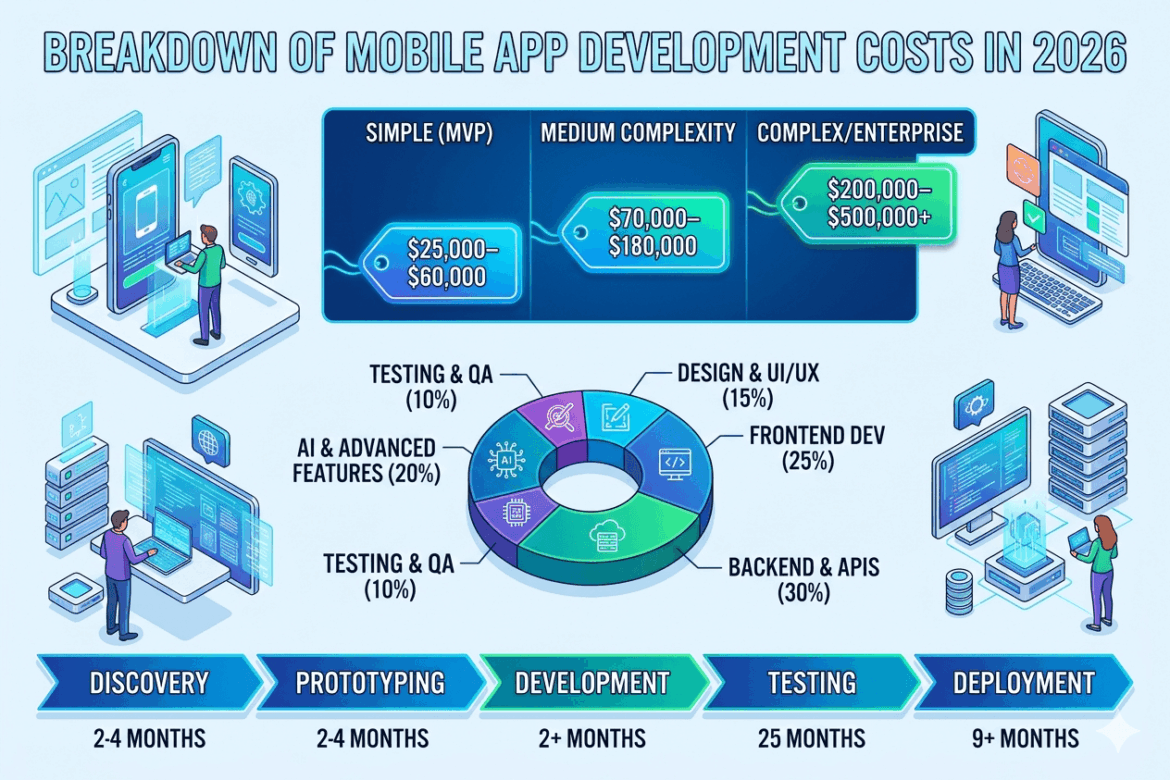
In 2026, the cost of building a mobile app typically ranges between $25,000 to $300,000+, depending on the app’s complexity and features.
Here’s a quick breakdown:
-
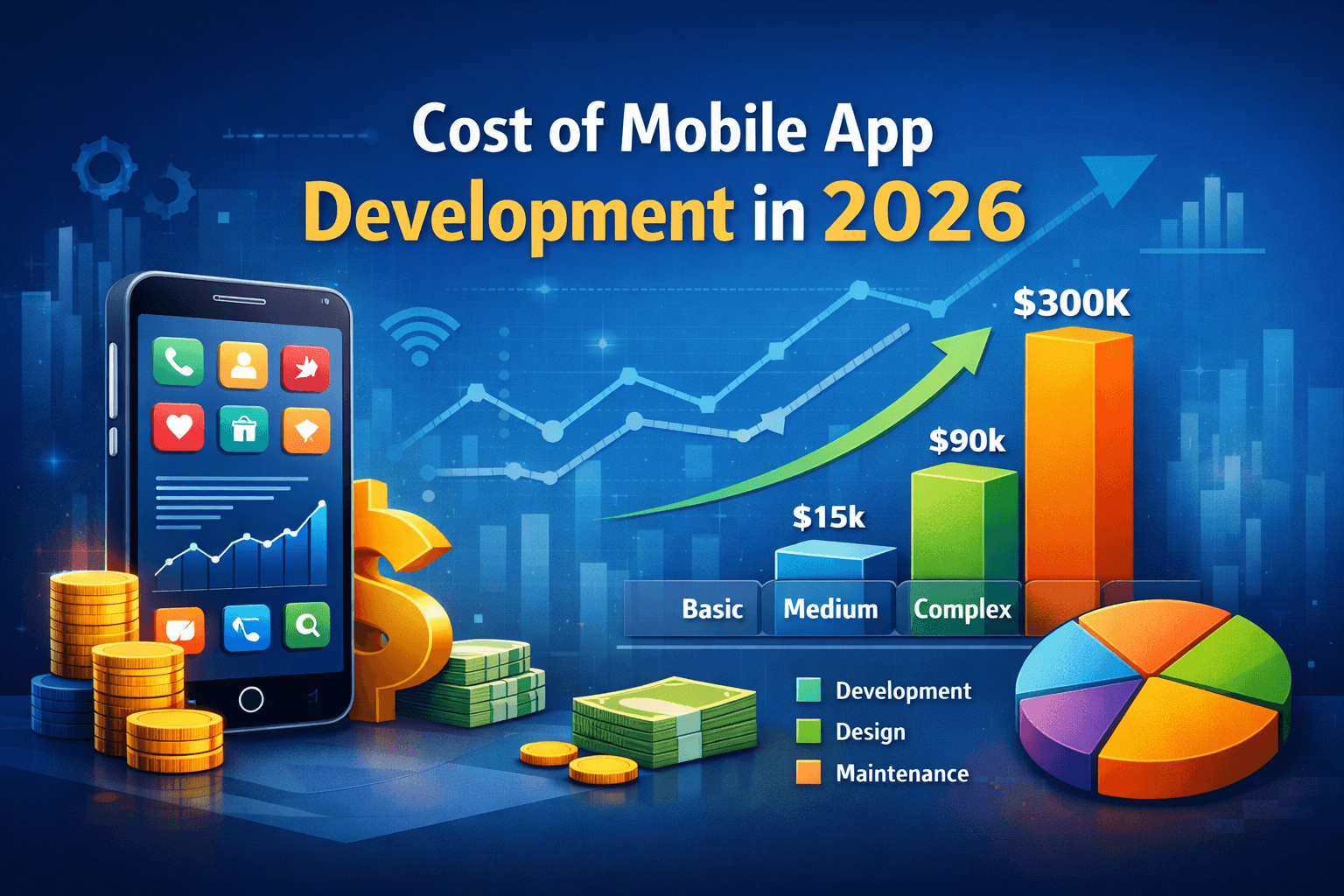
Basic Apps: $15,000 – $30,000
-
Medium Complexity Apps: $30,000 – $90,000
-
Complex Apps: $100,000 – $300,000+
On average, most business apps fall between $53,000 and $160,000.
These costs include design, development, testing, and deployment. However, the final price depends on multiple variables.
Key Factors That Affect App Development Cost
1. App Complexity
The complexity of your app is the biggest factor influencing cost.
-
Simple apps include basic features like login, forms, and static content.
-
Medium apps include APIs, payment systems, and dynamic content.
-
Complex apps include AI, real-time updates, and advanced integrations.
For example, a simple app may take 2–3 months, while a complex app can take over a year to build.
2. Platform Choice (iOS, Android, or Both)
The platform you choose significantly impacts the budget.
-
Single platform (iOS or Android): Lower cost
-
Cross-platform (Flutter/React Native): Moderate cost
-
Native apps (both platforms separately): Highest cost
Cross-platform development can save 30–40% compared to building separate apps.
3. Features and Functionality
Each feature adds to the total cost. Here are estimated costs of popular features in 2026:
-
Push notifications: $1,000 – $3,000
-
Payment gateway: $2,000 – $6,000
-
GPS & maps: $5,000 – $10,000
-
Chat/messaging: $6,000 – $12,000
-
AI/ML features: $10,000 – $25,000+
The more features you add, the higher the development time and cost.
4. UI/UX Design
User interface (UI) and user experience (UX) design play a crucial role in app success.
-
Basic design: Lower cost
-
Custom animations & branding: Higher cost
A well-designed app improves user retention but may increase development cost by 20–30%.
5. Development Team Location
Where your developers are located has a huge impact on pricing.
-
North America: $80 – $150/hour
-
Europe: $60 – $120/hour
-
Asia (India): $25 – $45/hour
This is why many companies outsource development to countries like India to reduce costs while maintaining quality.
6. Backend Infrastructure
Apps that require:
-
Real-time data
-
Cloud storage
-
APIs and integrations
…will cost more due to backend development and server infrastructure.

7. Testing and Quality Assurance
Testing ensures your app works smoothly across devices and platforms.
In 2026, QA typically accounts for 15–25% of total development cost.
Skipping testing can lead to bugs, poor performance, and higher costs later.
Cost Based on App Type
Different types of apps have different cost ranges:
-
Simple Utility Apps: $20,000 – $30,000
-
E-commerce Apps: $25,000 – $90,000
-
On-demand Apps (Uber-like): $45,000 – $180,000
-
Social Media Apps: $120,000 – $300,000
-
Enterprise Apps: $150,000 – $400,000+
For example, building a basic e-commerce app is much cheaper than creating a full-scale social networking platform.
Hidden Costs You Should Know
Many businesses underestimate the hidden costs of app development. These include:
1. Maintenance and Updates
After launch, apps require regular updates, bug fixes, and improvements.
-
Annual maintenance cost: 15–20% of development cost
2. Third-Party Services
You may need to pay for:
-
Payment gateways
-
Cloud hosting
-
APIs
These can cost $1,000 to $10,000+ per year.
3. App Store Fees
-
Apple App Store & Google Play Store fees
-
Subscription or revenue-sharing costs
4. Marketing and User Acquisition
Building an app is not enough—you also need to promote it through:
-
Digital marketing
-
Ads
-
SEO
Cost of Hiring Developers in 2026
Hiring developers is another major cost component.
Freelancers
-
$18 – $75/hour
-
Suitable for small projects
In-house Developers
-
$60,000 – $150,000/year (US)
-
₹3L – ₹20L/year (India)
Development Agencies
-
Higher cost but better quality, support, and scalability
Choosing the right team depends on your budget and project complexity.
How to Reduce App Development Cost
If you’re working with a limited budget, here are some smart strategies:
1. Start with an MVP (Minimum Viable Product)
Build a basic version first, then add features later.
2. Use Cross-Platform Development
Frameworks like Flutter or React Native can save time and money.
3. Outsource Development
Hiring developers from cost-effective regions can reduce expenses.
4. Prioritize Essential Features
Avoid adding unnecessary features in the first version.
Timeline vs Cost
Time is directly related to cost in app development.
-
Simple app: 2–3 months
-
Medium app: 4–8 months
-
Complex app: 8–18 months
Longer development time means higher cost due to more resources and effort.
Is Mobile App Development Worth the Investment?
Despite the high cost, mobile apps offer significant ROI:
-
Increased customer engagement
-
Better brand visibility
-
Higher revenue opportunities
-
Improved customer experience
In 2026, mobile apps are no longer optional—they are a critical part of business growth and digital strategy.
Conclusion
The cost of mobile app development in 2026 varies widely, ranging from $15,000 to over $300,000, depending on your requirements. Factors such as app complexity, features, platform, and development team play a major role in determining the final price.
To make the most of your investment, start with a clear plan, focus on essential features, and choose the right development partner. Whether you’re building a simple app or a complex platform, understanding the cost structure will help you make informed decisions and avoid unexpected expenses.